
Click on the image below to enlarge
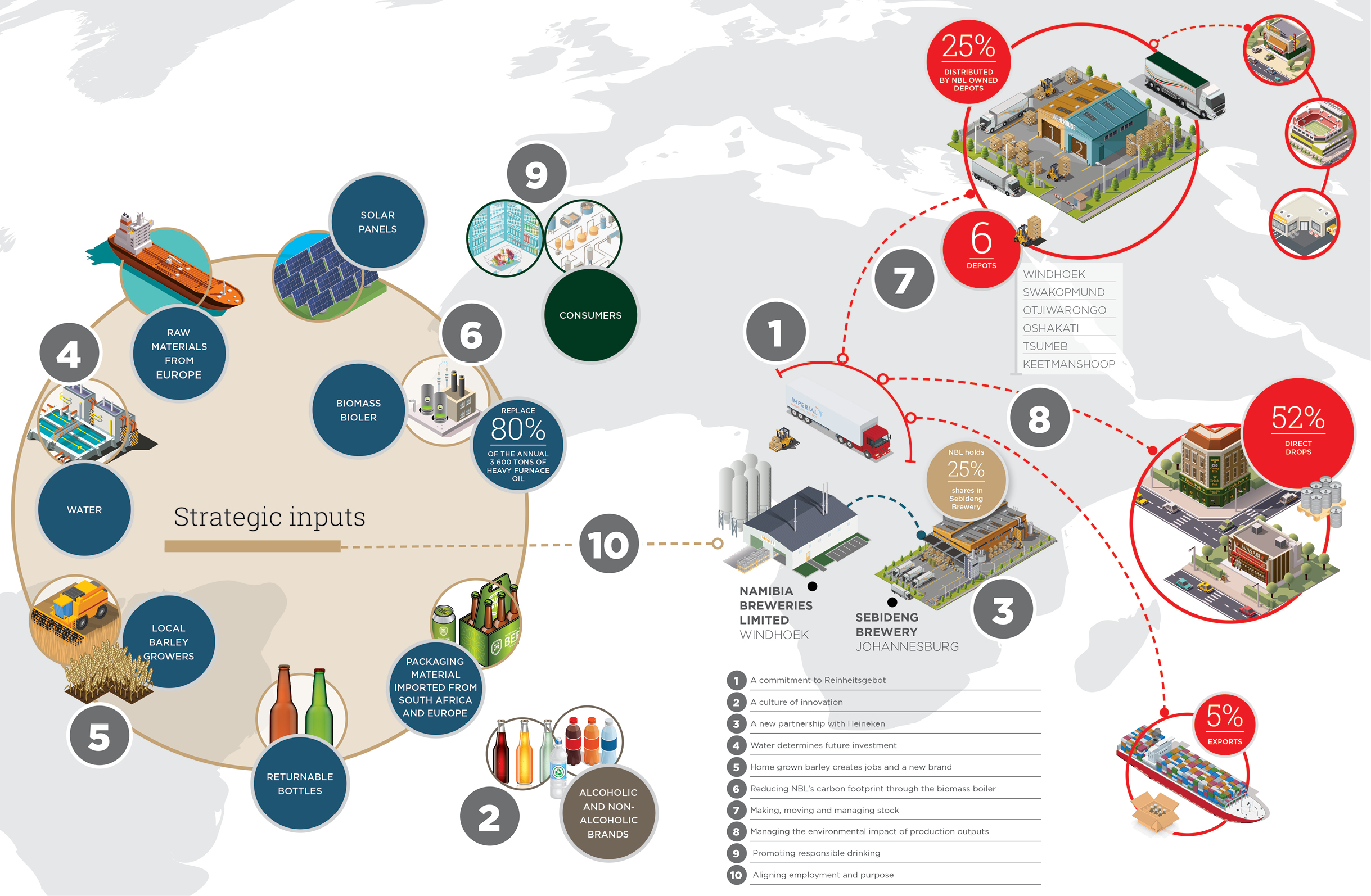
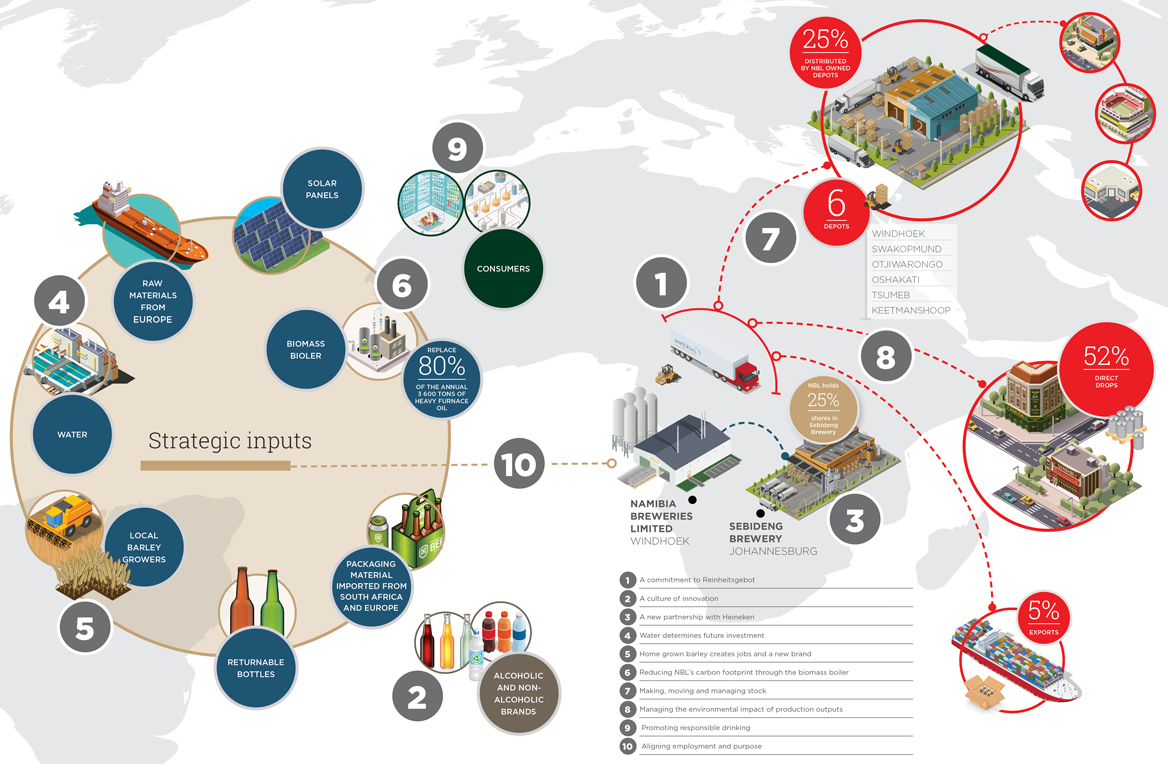
NBL acknowledges that environmental sustainability is about making responsible decisions that will reduce the negative impact on the environment. This includes reducing the consumption of water and energy, the amount of waste from production processes and taking into account the environmental impact of each product’s entire life cycle: from the development to the disposal of the product and its materials.
Read more about NBL’s response to water shortages.
Read more about initiatives to reduce thermal energy consumption.
Read more about returnable bottles in the section on making, moving and managing stock.
NBL’s rooftop solar plant, which was installed in 2013, provided 8% of NBL’s electricity demand in the past year. Overall, the solar plant has provided NBL with approximately 4.23 million kWh of green energy to date, saving 4 230 tons of carbon dioxide (CO2) emissions in support of the O&L Group’s vision which is a 20% Reduction in its Carbon Footprint by 2019.
|
NBL acknowledges that environmental sustainability is about making responsible decisions that will reduce the negative impact on the environment. |
Beer, among other fermented alcoholic products, produces CO2 as its main by-product. On its own, the CO2 from beer fermentation is considered “carbon neutral”, as it originates from CO2 sequestered on a continuous basis by growing barley, rather than from a fossil fuel. Instead of releasing it to atmosphere, a brewery can recover, purify and re-use this CO2, sequestering it as the “fizz” in beverages.
The CO2 recovery plant allows NBL to be independent – it has not purchased CO2 since the plant was commissioned in December 2013. NBL also produces soft drinks and RTD products which require CO2. NBL is able to produce these beverages without importing CO2 from South Africa, where CO2 is mostly produced through burning fossil fuels.
NBL has sold 389 tons of excess CO2 to external customers this year (400 tons in 2015).
A further opportunity to reduce NBL’s environmental impact is by investing in an alternative solar energy cooling system.
Other waste products from the brewing process include solid waste, wastewater and emissions. Alternative uses for yeast waste is currently being explored.
Outputs further include waste in the form of packaging material once products have been consumed. A significant portion of production is packaged in returnable bottles and therefore part of an extensive collection process, waste in this regard is minimised. NBL nevertheless supports campaigns to create public awareness of good environmental practices, including clean-up campaigns such as Project Shine. The work done in the Erongo community over the past few years – to educate learners and community groups while providing them with an opportunity to earn money through voluntary cleaning work – has now expanded to further coastal areas. NBL provides support to partners who share the same environmental objectives: municipalities, mines and community groups.
NBL led the establishment of the Recycle Namibia Forum where numerous corporates and non-governmental organisations work together under NBL chairmanship. Through the Schools Recycling Competition, 750 tons of recyclables were collected during the year.
|
NBL led the establishment of the Recycle Namibia Forum where numerous corporates and non-governmental organisations work together under NBL chairmanship. |
