
Click on the image below to enlarge
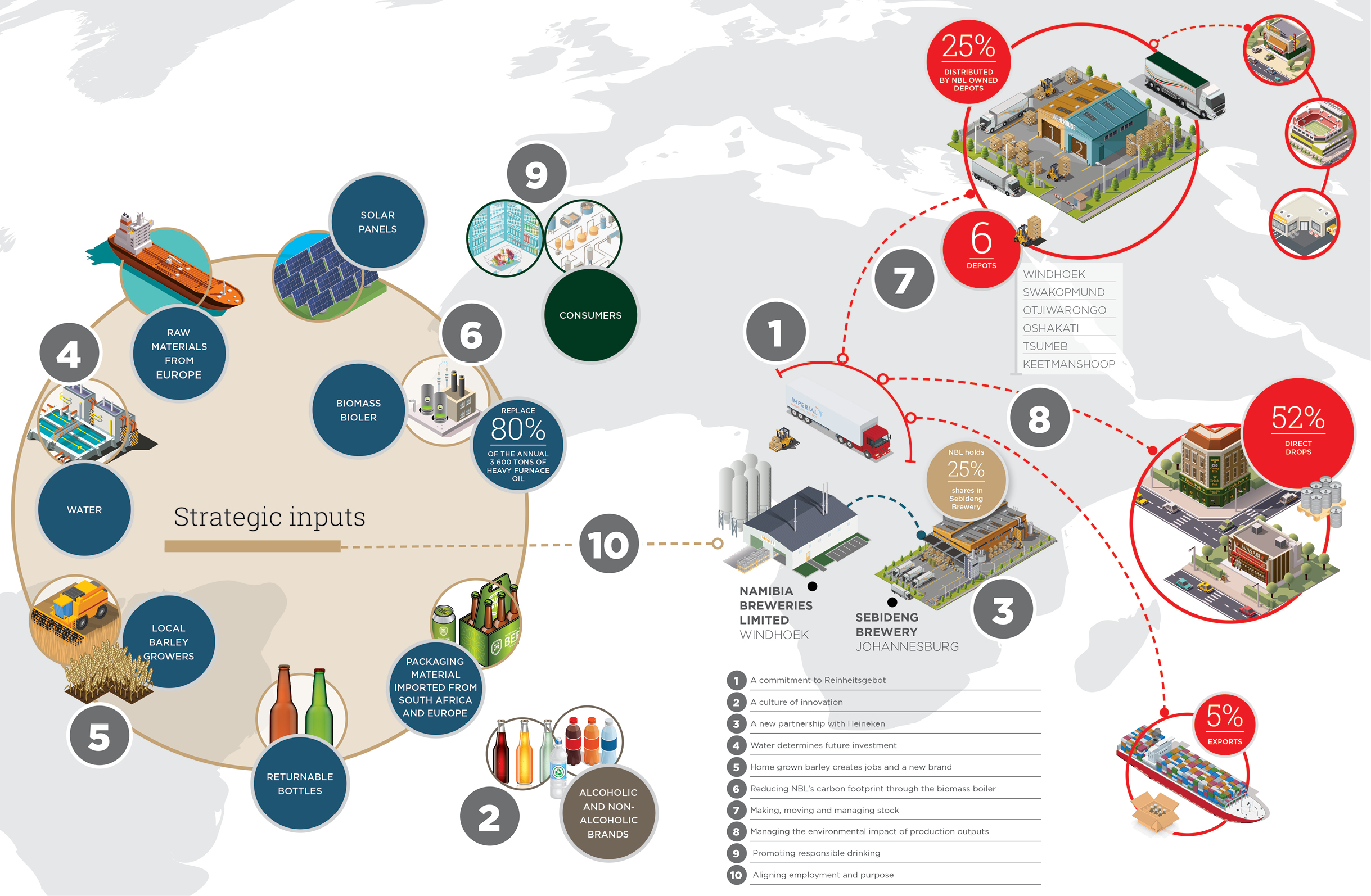
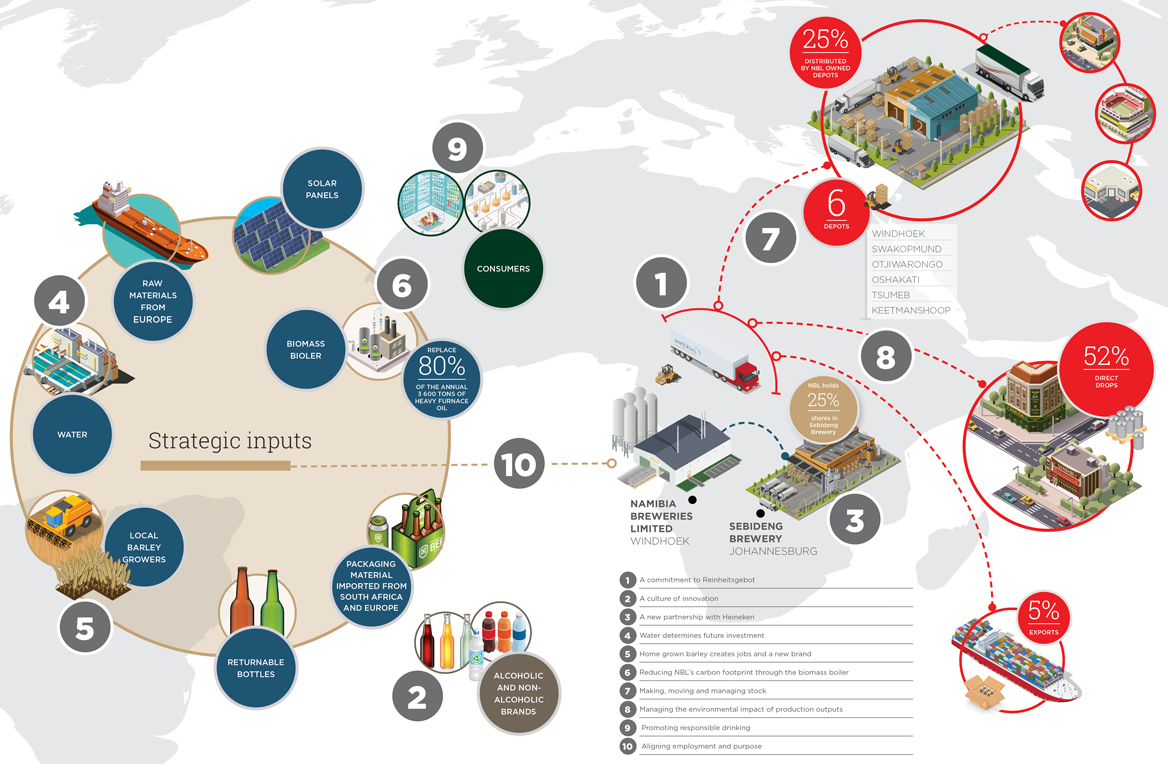
NBL is the biggest industrial consumer of water in Windhoek. With a sustained regional drought across southern Africa, the central region of Namibia (which includes Windhoek) has been one of the worst hit areas. In May 2016, NamWater, as the national bulk supplier of water to the City of Windhoek, announced an increase from 30% to 40% in required water savings, based on the predicted average annual demand.
NBL started engaging with NamWater and the City of Windhoek at the beginning of the financial year to address the weakening supply scenario.
As an intermediate solution, NBL obtained licences to drill two boreholes on its premises from the city’s Department of Water Affairs. These proved to be well vested with underground water, and the drilling of two more boreholes is in process. These boreholes are not linked to the aquifer supplying the city with water.
Longer-term sustainable supply will depend on plans to connect the centre of Namibia to other sources of water, which will reduce the dependency on rainfall and dams. Rising demand for water is driven by an increasing population, urbanisation and industrialisation. Supply options include desalination or, in the case of NBL, the migration of production to other areas, including Sedibeng in South Africa. As part of the new agreement with Heineken, a set volume of production has already been contracted for migration. However, if this has to increase, and volumes at the Windhoek brewery fall below a certain level, it becomes challenging to maintain yeast activity, which put the sustainability of production at risk.
NBL is continuously engaging with strategic partners such as Government and the City of Windhoek to find and support solutions, and has indicated its willingness to co-invest.
NBL’s water saving initiatives include reclamation in the brewing and packaging plants, which is set to reduce water consumption by 25%. Water reduction of 40 – 50% has been achieved in the production process over the last four years which, together with the expected reclamation saving, will bring the litres of water used to produce a litre of beverage to approximately 3.5 litres.
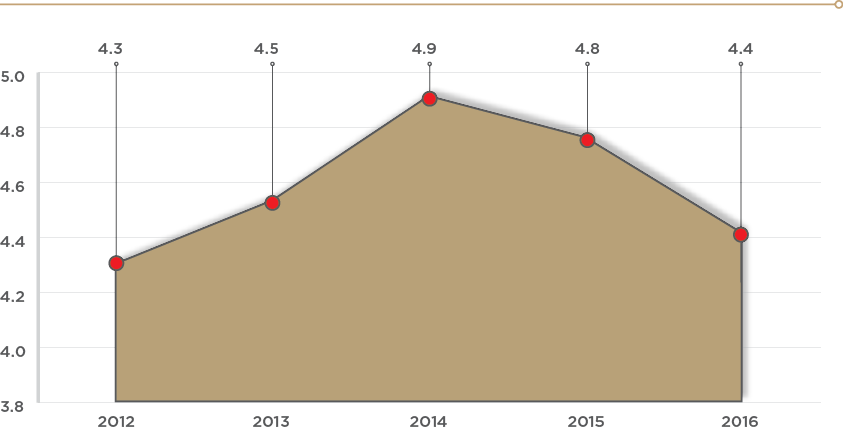
Currently, 4.4 litres of water is used to produce one litre of beer. The 3.4 litres beyond the actual water for the product do not go to waste – the majority is reclaimed and transferred into the city’s effluent system, where it gets recycled.
Litres of water used per litre of beverage produced
In the past six months a water pre-treatment plant was installed. Collectively, these initiatives have achieved 28% self-sufficiency at year end.
Using water to produce beer during a drought, which limits water availability for livestock and human consumption, requires trade-offs that take into account all stakeholders. NBL is committed to responsible strategic decisions involving the water crisis, as these potentially have far-reaching impacts for the local economy.
