
Click on the image below to enlarge
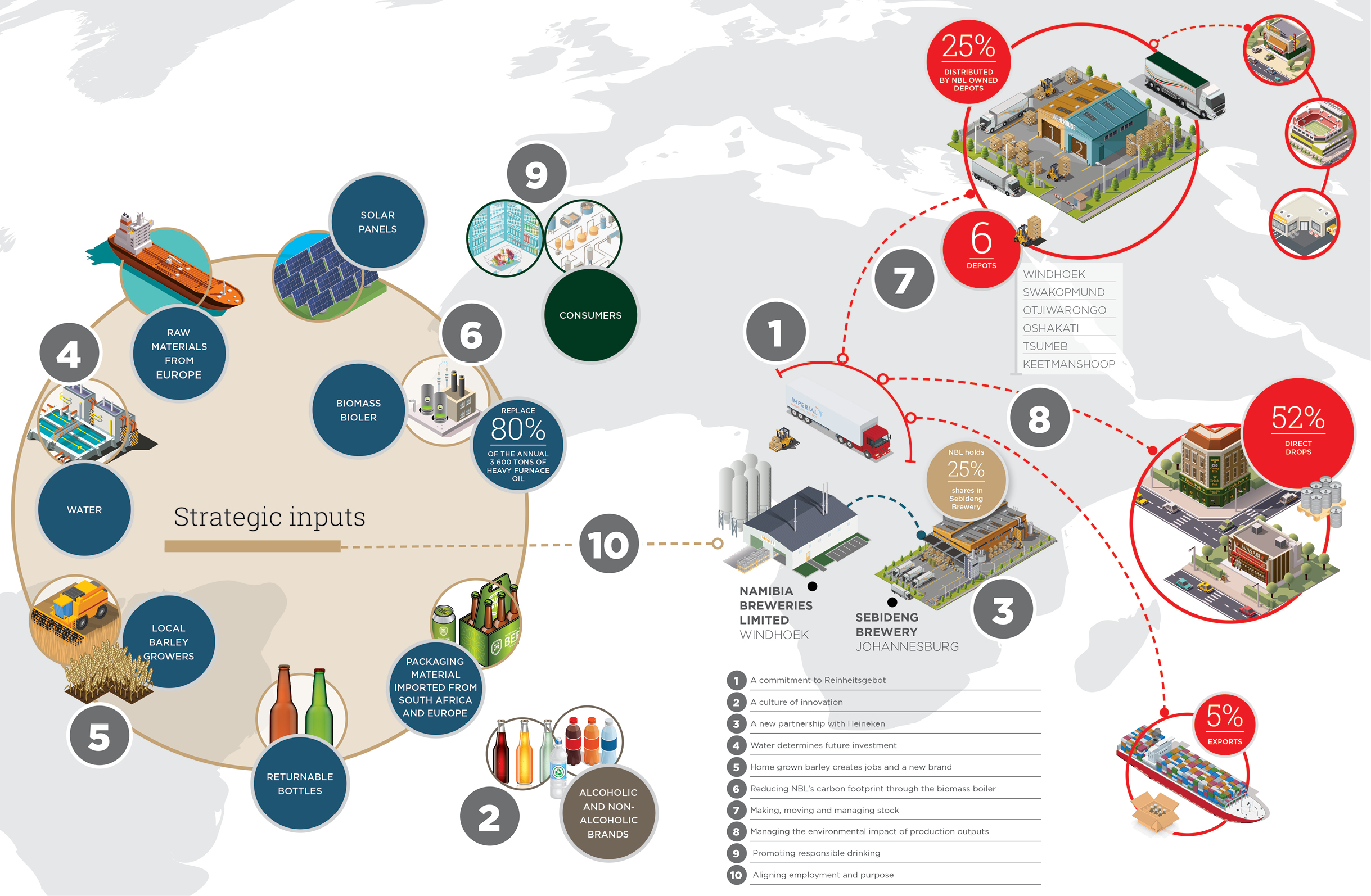
2016 was the 500-year celebration of the German Reinheitsgebot (“Purity Law”) across the world. The international beer tradition was introduced to Namibia together with the founding of the first breweries in South-West Africa (Namibia) by the German Pioneer Brewers around 1900. The Reinheitsgebot was discontinued for some years due to the unavailability of raw material and quality challenges, but was reintroduced in Namibia around 1983.
The Reinheitsgebot requires that brewers use only three natural ingredients: water, barley and hops. The law was originally introduced to protect consumers from beer that often contained additives that could be toxic or poisonous, such as mushrooms, stinging nettle and henbane.
It was also introduced in part to prevent price competition with bakers for wheat and rye. The restriction of grains to barley ensured the availability of affordable bread, as wheat and rye were reserved for use by bakers.
For NBL the Reinheitsgebot is a deliberate choice and commitment to deliver quality products on a consistent basis. It is the only brewery in Sub-Saharan Africa that adheres to the Reinheitsgebot, thereby maintaining a strong partnership with stakeholders in Europe. It also fits well with the NBL value: We do the Right Things Right.
To ensure continued compliance with the Reinheitsgebot, NBL’s brewing process is evaluated by an internationally qualified beer expert twice a year. NBL beers also participate in the DLG Quality Evaluation which is only applicable to Reinheitsgebot beers.
Read about NBL’s brand awards history.
In the absence of local malting facilities, NBL imports 100% of its malted barley and hops requirements from suppliers in Europe where regular quality testing of raw materials is done by accredited laboratories before being shipped. NBL’s master brewers have also been trained in Germany to ensure adherence to the spirit, and technical requirements, of the Reinheitsgebot.
NBL initiated a host of events to celebrate the birthday of the Reinheitsgebot, which commenced on 23 April 2016. These included a special pop-up museum, food and beer pairings at customer outlets, consumer promotions and beer festivals.
